A Conversation with Seth Godin on Strategy, Choice & Change

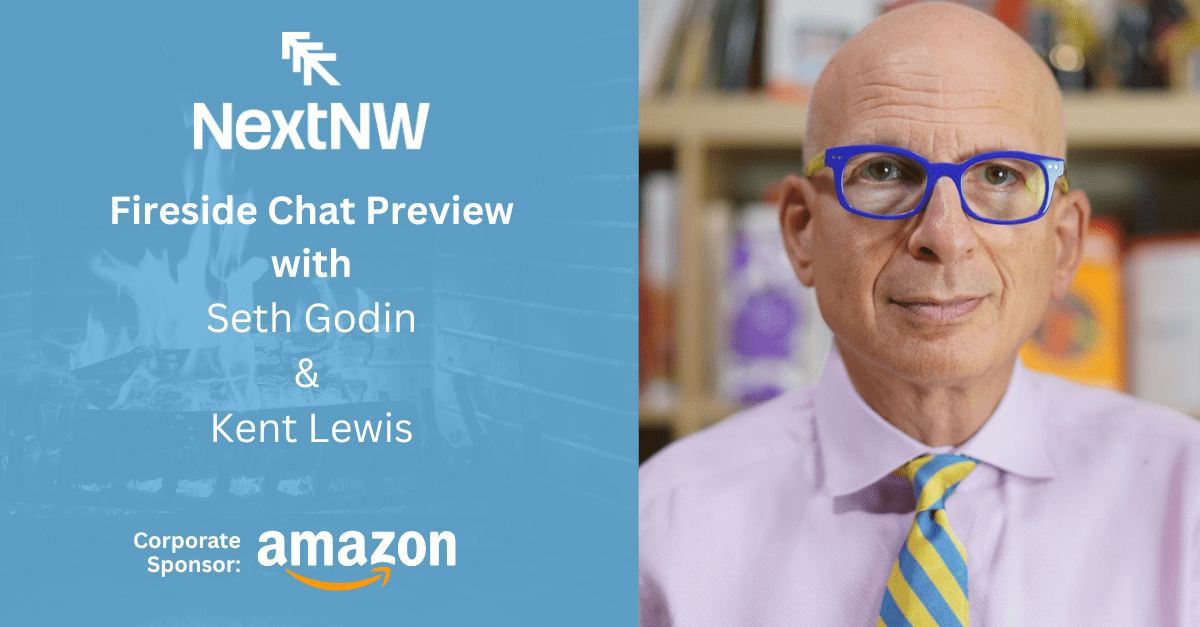
As NextNW prepares to welcome Seth Godin for a live fireside chat on March 3, we sat down with him to explore the ideas behind his newest book, This Is Strategy. Seth has shaped modern marketing and creative leadership for more than two decades. His daily blog reaches millions, his books have reframed how we work, and his teachings continue to help people make better, clearer choices in their careers and companies.

Ahead of his upcoming conversation with our region’s creative community, Seth shared insights with NextNW Executive Director Kent Lewis into why strategy needed a rethink, why clarity is so rare, and how leaders can navigate uncertainty with intention.

Below is a preview of that exchange.

Kent: Your new book, This Is Strategy, aims to simplify and rehumanize what strategy really means. What sparked your desire to write this book now?

Seth: I kept encountering smart, dedicated people who were stuck—not because they weren’t working hard enough, but because they hadn’t yet seen that strategy is about time, systems, empathy, and games working together. Once you see it, you can’t unsee it. And suddenly the path forward becomes clearer. The world is shifting faster than ever, creating both opportunities and challenges that demand better plans.

Kent: How does This Is Strategy build on or challenge ideas from earlier works like Purple Cow, The Practice, or This Is Marketing?

Seth: Purple Cow was about being remarkable, The Practice about showing up, and This Is Marketing about serving people and creating change. This book pulls all those threads together and adds the dimension of time—how do you make decisions today that create the conditions for tomorrow? It’s not about a single insight; it’s about seeing how systems, games, empathy, and time interact.

Kent: Many leaders overcomplicate strategy. Why do you think that is, and what’s the simplest place for them to begin?

Seth: We’ve been taught that strategy requires spreadsheets and fancy frameworks that feel sophisticated but often miss the point. The simplest place to start is by asking: Who will we become, who will we serve, and who will they help others become? Strategy isn’t a map. It’s a compass.

Kent: Many of our members lead agencies, in-house teams, or small businesses. What blind spots do you see most often in organizations like these?

 Seth: The biggest blind spot is optimizing for today while ignoring the systems they’re part of and the time required for real change. Many chase any client instead of choosing their customers. They mistake activity for progress. And they underestimate the power of a small head start. Strategy often requires reinvesting early advantages instead of immediately squeezing for revenue.

Kent: Your book emphasizes making better choices with limited information. How can teams build confidence when clarity is never perfect?

Seth: Perfect information never arrives. Decisions aren’t permanent destinations—they’re moves in a game played over time. When you trust that the system provides feedback and that you can adjust as you go, it becomes much easier to take the next step instead of waiting for certainty that won’t come.

Kent: You’ve studied how people work, learn, and lead for decades. What mindset shifts are most essential right now?

Seth: Move from “take what you can get” to “choose who you serve.” Recognize that while you don’t have unlimited agency, you’re not powerless either. And understand that real change comes from patient investment—building assets, networks, and trust—not from viral moments or perfect tactics.

Kent: You’ve written extensively about generosity. How does generosity fit into strategic thinking today?

Seth: Generosity isn’t separate from strategy—it’s central to it. The most resilient strategies create conditions where everyone involved can become better. They build systems based on abundance, not scarcity. Helping others get where they’re going creates the network effects and cultural change that make your work sustainable.

Kent: Many people in our community struggle with burnout and decision fatigue. What helps leaders think more clearly?

Seth: There are three kinds of work: chores and tasks, leverage, and emotional labor. Burnout often happens when we spend too much time on chores while avoiding the emotional labor of change and decision-making. Strategy gives you permission to focus on the work only you can do—and to see the rest as choices, not obligations.

Kent: Over your career, what patterns have you noticed in organizations that consistently get strategy right?

Seth: They treat strategy like a garden. They choose their customers intentionally. They reinvest small advantages. They build systems that make it easier for the current to flow where it already wants to go. And they’re willing to walk away from a strategy they drifted into, even if they’re good at the tactics.

Kent: Without giving too much away, what’s one step attendees can take immediately after the webinar to make better strategic decisions?

Seth: Ask: What system am I working within, and what tension am I creating by showing up with my change? Then identify your smallest viable audience and make the next decision that helps them become who they seek to be. Strategy isn’t about having all the answers. It’s about asking better questions and taking the next move.

Join the Live Conversation on March 3

Seth will go deeper into these themes—and many more—during our 60-minute fireside chat and Q&A.

$25 for NextNW Members
$35 for General Public

Attendance is limited to preserve the intimacy of the discussion so don’t miss your chance to attend.

Related Articles

2019 Digital Marketing Predictions (+ 2018 Year-in-Review)

As we wind down 2018 this holiday season, it’s a time to reflect on the year’s highs and lows. It’s also a good time to revisit Anvil’s annual digital marketing predictions for 2018 and look forward with new digital marketing predictions for 2019. As we’ve done for the past 12+ years, we sat down and graded our 2018 predictions, then discussed our 2019 digital marketing predictions and are ready to share today.

2019 Digital Marketing Predictions (+ 2018 Year-in-Review)

As we wind down 2018 this holiday season, it’s a time to reflect on the year’s highs and lows. It’s also a good time to revisit Anvil’s annual digital marketing predictions for 2018 and look forward with new digital marketing predictions for 2019. As we’ve done for the past 12+ years, we sat down and graded our 2018 predictions, then discussed our 2019 digital marketing predictions and are ready to share today.

Responses